Most people pick their cannabis the same way they pick produce at the grocery store. They look at it, maybe smell it, check the price, and make a decision based on whatever feels right in the moment. There's nothing wrong with that approach, but there's a lot happening before that flower ever reaches the shelf that most customers never think about, and knowing even a little bit of it can change the way you shop.
At ReLeaf, we're a vertically integrated operation. That means the flower in our dispensaries is grown by our own cultivation team at Tri-Med, processed in our own kitchen, and sold in our own stores. We're involved from the time a seed goes into soil to the moment you walk out the door with a bag. That kind of control isn't standard in this industry, and it has a direct impact on what ends up in your hands.
Here's what that process actually looks like, and why it matters when you're the one buying.
THC Percentage Isn't the Whole Picture
This is probably the single most common misconception we see at the counter. A customer walks in, looks at the numbers, and reaches for whatever has the highest THC percentage. It makes sense on the surface. Higher number, stronger product, better experience, right?
Not really. THC tells you about potency, but it doesn't tell you much about quality, flavor, or how that flower is actually going to make you feel. Two strains sitting at 25% THC can produce completely different experiences depending on their terpene profiles, how they were grown, and how they were cured after harvest.
A well-grown flower at 20% THC with a rich terpene profile will almost always deliver a more enjoyable, more well-rounded experience than a poorly grown flower at 30% THC that was rushed through processing. If you've ever bought the "strongest" option and been disappointed, this is usually why.
How It's Grown Shows Up in How It Smokes
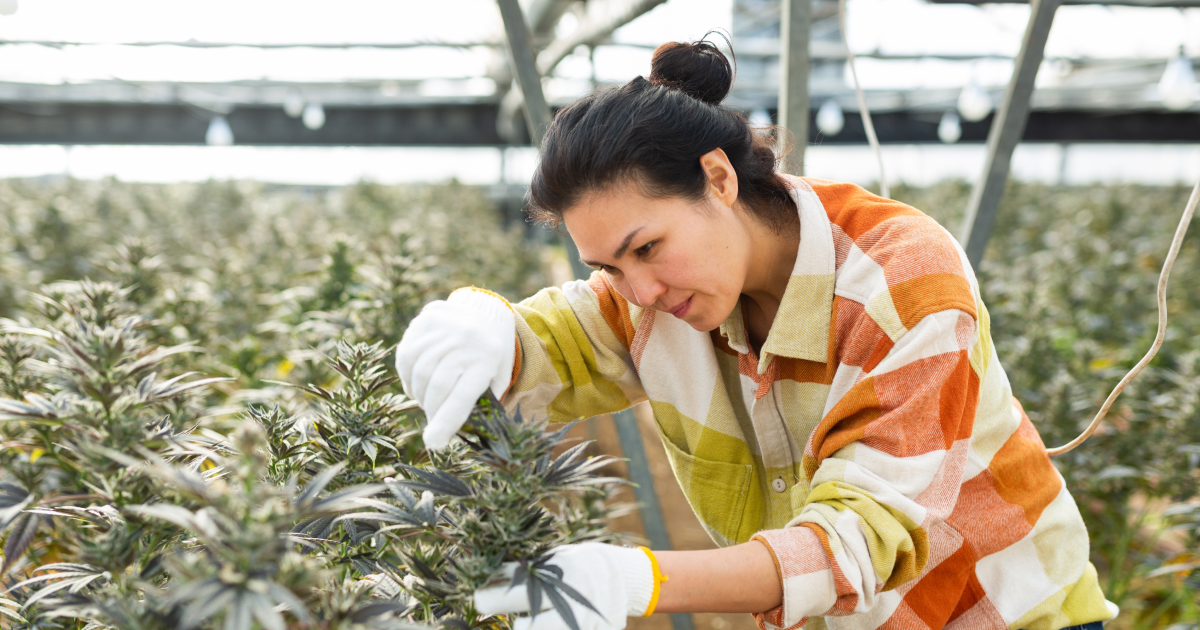
Cannabis is an agricultural product, and like any crop, the growing conditions shape the final result. Soil quality, light cycles, nutrient programs, temperature, humidity, and even the water source all affect the flower's potency, flavor, and smoothness.
When cultivation is done carefully, with attention to the plant at every stage, you get flower that's denser, frostier with trichomes, more aromatic, and smoother on the inhale. When it's rushed or done at scale without that same level of care, you get product that looks fine on the shelf but doesn't deliver when you actually use it.
Because Tri-Med handles our cultivation in-house, we have visibility into every stage of that process. We know what nutrients went into the soil, how long the plants were given to mature, and whether corners were cut anywhere along the way. For most dispensaries buying from third-party growers, that level of detail simply isn't available.
Curing Is Where a Lot of Flower Gets Ruined
Most customers have never thought about curing, but it's one of the biggest factors in whether a product smokes well or not. Curing is what happens after the plant is harvested: a slow, controlled drying process that preserves terpenes, smooths out the smoke, and develops the flavor profile.
When curing is done right, it takes time. Weeks, not days. The moisture content drops gradually, the chlorophyll breaks down, and what you're left with is flower that tastes clean, burns evenly, and feels smooth. When it's rushed to get product to shelves faster (which happens more than people realize), you end up with flower that's harsh, has a grassy or hay-like taste, and doesn't hold its potency the way it should.
This is one of the advantages of controlling our own supply chain. We're not under pressure to push product out the door before it's ready. The flower gets the time it needs, and you can tell the difference when you open the jar.
Fresh Flower Matters More Than You Think
Even after a perfect grow and cure, cannabis degrades over time. The terpenes that give flower its smell and flavor are volatile compounds, meaning they evaporate. The longer a product sits on a shelf or in a warehouse, the more it loses. THC slowly converts to CBN (which is more sedating and less potent), and the overall experience gets flatter and less distinct.
Because we're growing and selling under the same operation, our flower doesn't sit in a distribution warehouse waiting to be purchased by a dispensary that then puts it on a shelf. The path from harvest to sale is shorter, which means what you're buying is fresher. That's something you can actually notice, especially if you've ever compared a product that's been sitting around for months to one that was recently packaged.
What This Means for You at the Counter
None of this means you need to become a cannabis botanist to shop well. But it does mean that a few small shifts in how you evaluate flower can lead to noticeably better purchases:
-
Smell it if you can. Strong, distinct aroma usually means the terpenes are intact and the cure was done well. If it smells like nothing or like cut grass, that's a bad sign.
-
Look at the trichomes. That frosty, crystal-like coating on the bud is where the cannabinoids and terpenes live. More visible trichome coverage generally means more care went into the grow.
-
Ask when it was packaged. Fresher is better. If a product has been sitting for several months, it may not deliver the same experience as something more recently processed.
-
Don't chase the highest number. Ask your budtender what they'd recommend based on how you want to feel, not just what has the most THC. That conversation will get you to a better product almost every time.
We take this stuff seriously because it's our name on the building and our growers behind the product. That connection between who grows it and who sells it is a big part of what makes ReLeaf the best dispensary in Niles, Michigan. When you ask us about a strain, we can actually tell you about it, not just read you the label.
FAQ
Does higher THC always mean a better product?
No. THC only measures one dimension of the experience. Terpene profiles, grow quality, and curing all play a major role in how flower actually feels when you use it. A lower-THC flower with a strong terpene profile can easily outperform a high-THC flower that was poorly grown or rushed through curing.
What does "vertically integrated" mean for the customer?
It means the same company that grows the cannabis also processes it and sells it. At ReLeaf, that's our relationship with Tri-Med. The practical benefit is fresher product, more quality control, and budtenders who can actually speak to where the flower came from.
How can I tell if flower was cured well?
Smell and texture. Well-cured flower should have a distinct, pleasant aroma and a slight stickiness when you break it apart. If it crumbles to dust or smells like hay, the cure was likely rushed.
Does cannabis expire?
It doesn't become unsafe, but it does degrade. Over time, terpenes evaporate and THC converts to CBN, which changes both the flavor and the effect. Buying fresher product generally means a better experience.
Why does ReLeaf's flower taste different from other dispensaries?
Because we control the entire process. Our cultivation team at Tri-Med grows it, our kitchen processes it, and our dispensaries sell it. That shorter path from plant to shelf means more terpenes are preserved and the product reaches you closer to its peak quality.
View More
 How Long Does Being Too High Last, and What Helps in the Meantime?
 Can Cannabis Help With Spring Allergies?
 How to Buy Cannabis for Someone Else Without Totally Guessing