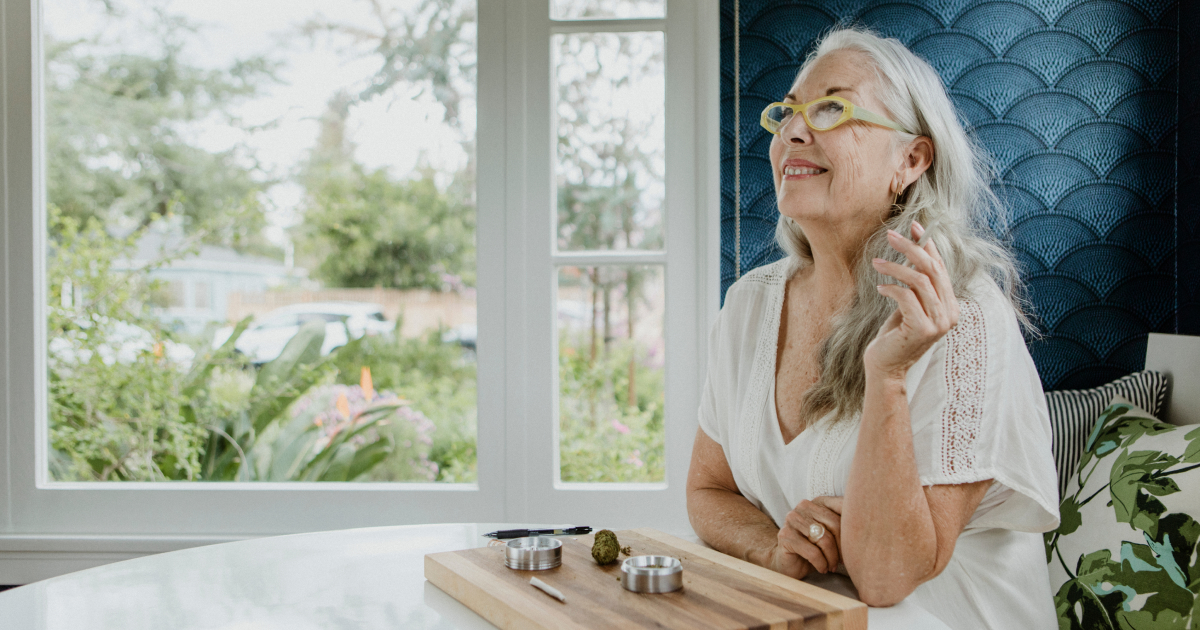
The products that work well for a 25-year-old daily smoker are often the wrong starting point for someone managing joint pain or trying to sleep through the night. Adults over 50 respond differently to cannabis because of changes in tolerance, metabolism, and endocannabinoid system activity. The best products for this group tend to be lower in THC, slower in onset, and designed for specific relief rather than intensity.
Why the Same Product Acts Differently After 50
If you haven't touched cannabis since the '80s or '90s, your tolerance has effectively reset to zero. Your body processes THC and CBD differently now than it did at 25, and a slower metabolism means edibles and tinctures stay active in your system longer.
This isn't a small demographic, cannabis use among adults 65 and older has been climbing steadily, with past-year use more than doubling over the last decade. People in this age group are showing up at dispensaries with real questions about real problems: sleep, pain, anxiety, stiffness.
Important note: many older adults take prescription medications where interactions with THC or CBD are worth a conversation with your doctor. Blood thinners, sedatives, and certain heart medications are the most commonly flagged. A budtender can point you toward gentler products, but your prescribing physician is the one who knows your full medication picture.
The goal for most people over 50 isn't to get as high as possible. It's functional relief, or a gentle wind-down before bed.
For Sleep: Low-Dose Edibles and Indica-Leaning Tinctures
Sleep disruption is one of the most common reasons older adults start looking at cannabis. The CDC reports that roughly one in three adults over 50 regularly gets less sleep than recommended, and the numbers get worse with age. If that's you, two product categories are worth your attention:
Edibles
Edibles take 45 to 90 minutes to kick in, which sounds like a drawback until you realize the timing lines up well with a bedtime routine. Take a low-dose gummy after dinner, and the effects arrive right around the time you're settling in.
Duration is the other advantage. A single dose typically lasts four to six hours, which covers most of the night without needing to redose at 2 a.m.
Start at 2.5 to 5mg of THC. Many people over 50 find that 5mg is plenty. On our menu, look for gummies in the 5mg-per-piece range. They're dosed consistently, which matters when you're trying to find your minimum effective amount.
Tinctures
Tinctures absorb under the tongue in 15 to 30 minutes, so you get faster feedback than edibles and more precise control over your dose. You can adjust by a single milligram if you want to.
For sleep, a 1:1 THC:CBD tincture is a solid starting point. The CBD component reduces the chance of racing thoughts or anxiety that THC alone can sometimes trigger, particularly in people with lower tolerance. Our staff can point you to what's available in a balanced formulation.
For Pain and Inflammation: Topicals and Higher-CBD Options
Topicals
If you want to try cannabis for a sore knee or stiff lower back without any psychoactive effect at all, topicals are the lowest-risk entry point. Standard cannabis balms and lotions don't enter the bloodstream. They work at the site where you apply them, which also means they don't interact with most medications.
One distinction worth knowing: transdermal patches are different from topicals. Patches are designed to push cannabinoids through the skin and into the bloodstream, so they can produce systemic effects (including a mild high, depending on the formulation). A balm or lotion won't do that.
High-CBD or Balanced Products for Systemic Relief
Topicals handle localized soreness, but if you're dealing with broader inflammation or chronic pain that isn't limited to one joint, a CBD-dominant or 1:1 product taken orally addresses things more broadly. These are less intoxicating than high-THC options, which matters if you're using them during the day.
RSO (Rick Simpson Oil) comes up often in conversations about chronic pain. It's a full-spectrum, high-potency extract that some people rely on for serious discomfort. But it's not a beginner product. The dosing is measured in rice-grain-sized amounts for a reason. If you're curious, the RSO at ReLeaf article covers what it is and how to approach it safely.
For a gentler starting point, look for a CBD-forward edible or a 1:1 capsule on the menu.
For Anxiety and Stress: Microdosing and Balanced Ratios
High-THC products can make anxiety worse in some people, particularly those with low tolerance or a history of anxious responses to cannabis. If stress relief is what you're after, keeping the THC low and pairing it with CBD is where most older adults land.
Microdosing means 1 to 2.5mg of THC per dose, often repeated as needed rather than taken all at once. At that level, most people feel a subtle calming effect without any real impairment. A 2:1 CBD:THC gummy or a 1:1 and 2:1 cannabis product in tincture form are both good fits here. The menu usually has options in this range from brands like Wana or similar.
Vapes offer faster feedback for dialing in the right dose (you feel the effect within minutes and can stop), but lung health is a real consideration for older adults. If you have any respiratory concerns, edibles or tinctures are the safer format.
If You Haven't Used Cannabis in Decades, Start Here
The cannabis you remember from 1985 is not what's on the shelf today. According to the National Institute on Drug Abuse (NIDA), average THC potency in confiscated cannabis samples rose from roughly 4% in the mid-1990s to over 15% in recent years, with many dispensary products testing well above that. A product that looks modest by today's menu standards can still be strong for someone whose last experience was with much weaker flower.
Best first formats: a low-dose edible (2.5 to 5mg), a ratio tincture, or a single small puff of lower-THC flower. Avoid concentrates, infused pre-rolls, and anything marketed for potency as a starting point. Those products are designed for people who have built up tolerance over months or years of regular use.
Formats to Approach Carefully If You're New or Returning
Not every product on a dispensary menu is meant for every customer. A few categories are worth holding off on until you know how your body responds to lower doses:
-
Concentrates (wax, shatter, live resin) are designed for experienced users with established tolerance. The THC content can exceed 70%.
-
High-THC flower above 20 to 25% is harder to dose by feel, especially if you're only using occasionally.
-
Infused pre-rolls combine flower with concentrate, which multiplies potency in ways that can catch newer users off guard.
None of these are off-limits permanently. They're just not where to start. A bad first experience with an overly strong product is the most common reason people decide cannabis "isn't for them" and don't come back. Starting low gives you room to find what works without overshooting.
Frequently Asked Questions
Can Cannabis Interact With My Medications?
Yes, THC and CBD can interact with certain medications, particularly blood thinners, sedatives, and some heart medications. CBD in particular can affect how your liver processes other drugs. It's worth a conversation with your prescribing doctor before starting, especially if you're on multiple medications. A budtender can help you choose lower-risk product formats, but they're not a substitute for medical advice.
Do I Need a Medical Card to Buy Cannabis If I'm Over 21?
No. Recreational cannabis is available to anyone 21 and older with a valid government-issued ID. A medical card can offer tax savings and access to higher purchase limits, but it's not required to shop at ReLeaf or any licensed dispensary in the state.
What's the Difference Between CBD and THC for Someone My Age?
THC is the compound that produces the high. CBD does not. CBD is often used for inflammation, anxiety, and sleep support without intoxication. Many older adults find that products combining both (1:1 or 2:1 ratios) work better than either compound alone, because the CBD moderates the THC's intensity while both contribute to relief.
How Long Do Edibles Take to Work, and Why Does It Matter?
Edibles typically take 45 to 90 minutes to kick in, sometimes longer if you've eaten a large meal. This delay is the single biggest reason people accidentally take too much. They eat a gummy, feel nothing after 30 minutes, take another, and then both hit at once. Start low, wait the full 90 minutes before considering more.
Is It Safe to Use Cannabis If I Have a Heart Condition?
This is a question for your cardiologist. THC can temporarily raise heart rate, which matters for people with certain cardiac conditions. CBD-dominant products carry less cardiovascular risk, but medical guidance applies here. No budtender should be making that call for you, and a good one won't try to.
Published June 2026 • Last reviewed June 2026
View More
 What Does "Full-Spectrum" Mean on a Cannabis Product?
 Why Does Cannabis Make Some People Anxious?
 Is It Okay to Use Cannabis Every Night to Sleep?