
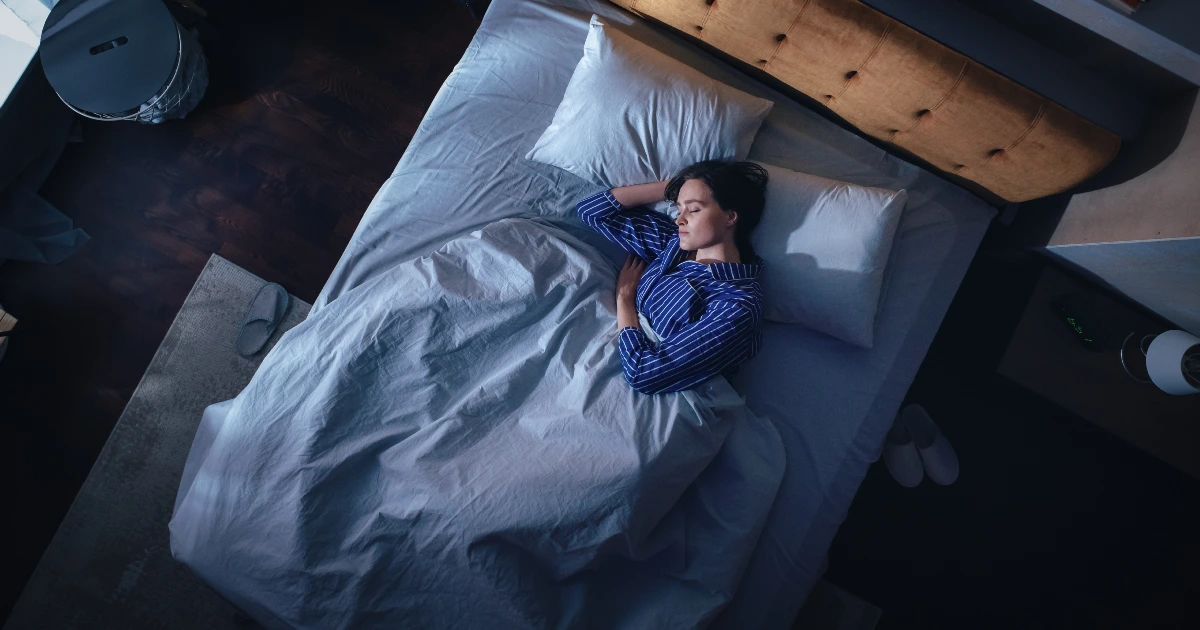
Nightly cannabis use for sleep isn't automatically a problem, but two real mechanisms work against you over time: THC gradually suppresses REM sleep, and tolerance to its sedative effects builds with consistent use. Knowing what to watch for and how to adjust keeps the routine useful instead of letting it stop working.
What Nightly Cannabis Use Does to Your Sleep Over Time
Most people who use cannabis for sleep notice the same thing first: they fall asleep faster. THC reduces sleep onset latency, which is the clinical term for the gap between lying down and actually being asleep. For people who spend 45 minutes staring at the ceiling, that effect is worth a lot.
Falling asleep faster and sleeping well are two different outcomes, though, and nightly users tend to blur them together. A 2017 review in the Journal of Clinical Sleep Medicine, still the most-cited systematic review on this question, found that regular THC use suppresses REM sleep, the stage tied to dreaming, memory consolidation, and emotional processing. You might be getting seven or eight hours, but the architecture of that sleep shifts over time.
Then there's tolerance. Research published in Current Psychiatry Reports, one of the few papers to directly examine this pattern, documents how the sedative effects of THC diminish with consistent nightly use. The dose that knocked you out in week one produces a milder effect by week six.
Five Signs Your Nightly Routine Needs a Reset
If any of these patterns sound familiar, your nightly cannabis routine has probably shifted from working for you to working around tolerance.
-
You need more product than you did three months ago to get the same sleepy feeling.
-
You fall asleep fine but wake up at 2 or 3 a.m. and can't get back down. This is a common pattern as THC wears off mid-sleep and REM activity rebounds.
-
You feel groggy or flat in the morning even after a full night in bed.
-
You feel anxious or restless on nights you skip. That anxiety is often more about the disrupted ritual than any physical withdrawal.
-
You've stopped dreaming entirely, or your dreams become unusually vivid on nights you go without.
Two or more of these is a reasonable signal to consider a short tolerance break or a format change. One on its own might just be a bad week.
Product Format Affects How Fast Tolerance Builds
High-THC flower smoked nightly tends to build tolerance faster than low-dose edibles or tinctures. Part of that is dose consistency, and part is how each format delivers THC to your system.
Flower and vapes hit fast, which makes them easy to time before bed. The tradeoff is that dosing is inconsistent. You take an extra hit, hold it longer, pack a bigger bowl. Consumption tends to creep upward without you noticing.
Edibles offer more precise dosing but create a timing problem. Taking a gummy right at bedtime means peak THC arrives during your early sleep stages, which can disrupt sleep architecture rather than support it. A general guideline: 60 to 90 minutes before bed for most edibles.
Tinctures land somewhere in between. Faster onset than edibles, more consistent dosing than flower, and easier to keep at a low dose over time. For people who want a sustainable nightly routine, tinctures are often the most practical format.
CBN (cannabinol) is showing up in more sleep-oriented products. Anecdotal reports and early interest suggest it may have sedative properties distinct from THC, though the published science is still thin. Our guide to Best Cannabis Products for Sleep Enhancement covers the options in more detail.
Not sure which format makes sense for your situation? The staff at ReLeaf in Niles can walk you through what's on the menu and help you match a product to how you sleep. Stop in or browse online before your next visit.
What a Tolerance Break Looks Like in Practice
A tolerance break resets your sensitivity so your routine works again at a lower dose. For most casual nightly users, two to seven days is enough to notice a meaningful difference. Heavier or longer-term users may need more time. The first night or two will probably be rougher: more difficulty falling asleep, more vivid dreams as REM sleep rebounds. That's normal and temporary.
A few things that help bridge the gap: CBD-only products in the evening, consistent sleep hygiene (fixed bedtime, dark room, no screens in bed), and accepting that the first couple nights won't be great.
When you come back, start at a lower dose than where you left off. Restarting at the same amount you were using before the break tends to put you back at square one within a few weeks.
The Dependency Question Most People Ask
Physical dependence on cannabis is possible but uncommon at moderate doses. Cannabis use disorder is a recognized condition, and NIDA acknowledges it affects a portion of regular users. But for most people using cannabis for sleep at reasonable doses, the more relevant concern is psychological reliance.
The ritual of using cannabis before bed becomes your sleep cue. On nights you skip, the anxiety about not sleeping is often doing more work than any physical withdrawal symptom. Your brain has linked the product to the permission to sleep.
Most people recognize this pattern in themselves once it's pointed out. It's a behavioral loop, and it responds well to small changes in routine: varying the schedule, taking periodic breaks, making sure cannabis isn't the only tool in your sleep toolkit.
For older adults managing sleep alongside other medications or health conditions, a conversation with your doctor is worth having. A budtender can't evaluate drug interactions or individual health factors the way a physician can.
How to Build a Nightly Routine
Consistency in timing, format, and dose is the most useful thing you can do to keep a nightly cannabis routine working long-term.
-
Same time each night. Your endocannabinoid system responds to consistent timing. Variable use makes it harder to calibrate dose and effect.
-
Same format. Switching between flower one night and edibles the next makes it difficult to know what's working.
-
Lowest effective dose. Start lower than you think you need and adjust up slowly. This is the most common mistake people make when returning after a tolerance break.
-
Planned breaks. Building in a short break every six to eight weeks prevents tolerance from stacking to the point where the routine stops working.
-
Know what problem you're solving. Falling asleep and staying asleep are different issues. If you're waking at 3 a.m., a fast-onset product taken at bedtime may not be the right tool. A longer-lasting format or a microdosing approach might serve you better.
Not sure which format makes sense for your situation? Stop by our dispensary in Niles Michigan and the staff can walk you through what's on the menu and help you match a product to how you sleep.
Frequently Asked Questions
Will I Stop Being Able to Sleep Without Cannabis?
Not permanently. But psychological reliance is real. If skipping a night makes you anxious about sleep, that anxiety is often the bigger obstacle than any physical effect. Short breaks help recalibrate both tolerance and the mental association between cannabis and sleep.
Is Nightly Cannabis Use the Same as Addiction?
No. Cannabis use disorder is a recognized condition, but most nightly wellness users are dealing with habit and tolerance, not addiction. If use feels compulsive or is interfering with daily function, that warrants a conversation with a doctor.
Does CBD Help With Sleep the Same Way THC Does?
CBD and THC work differently. THC is more directly sedating at higher doses but suppresses REM sleep. CBD at moderate doses may support sleep quality without the same REM disruption, making it a useful complement or alternative for some users. The Role of CBD and THC in Enhancing Sleep covers this in more detail.
How Long Does a Tolerance Break Need to Be?
For most casual nightly users, two to seven days is enough to notice a meaningful difference. Heavier or longer-term users may need more time. The first couple of nights are typically the hardest, with more vivid dreams as REM sleep rebounds.
Does It Matter What Time of Night I Use Cannabis for Sleep?
Yes, especially with edibles. Taking an edible too close to bedtime means peak THC arrives during early sleep stages and can disrupt sleep architecture. A general guideline is 60 to 90 minutes before bed for edibles. Flower and tinctures have faster onset and are easier to time.
Published July 2026 • Last reviewed July 2026
View More
 What Does "Full-Spectrum" Mean on a Cannabis Product?
 Why Does Cannabis Make Some People Anxious?
 What Cannabis Pairs Well With Live Music?