
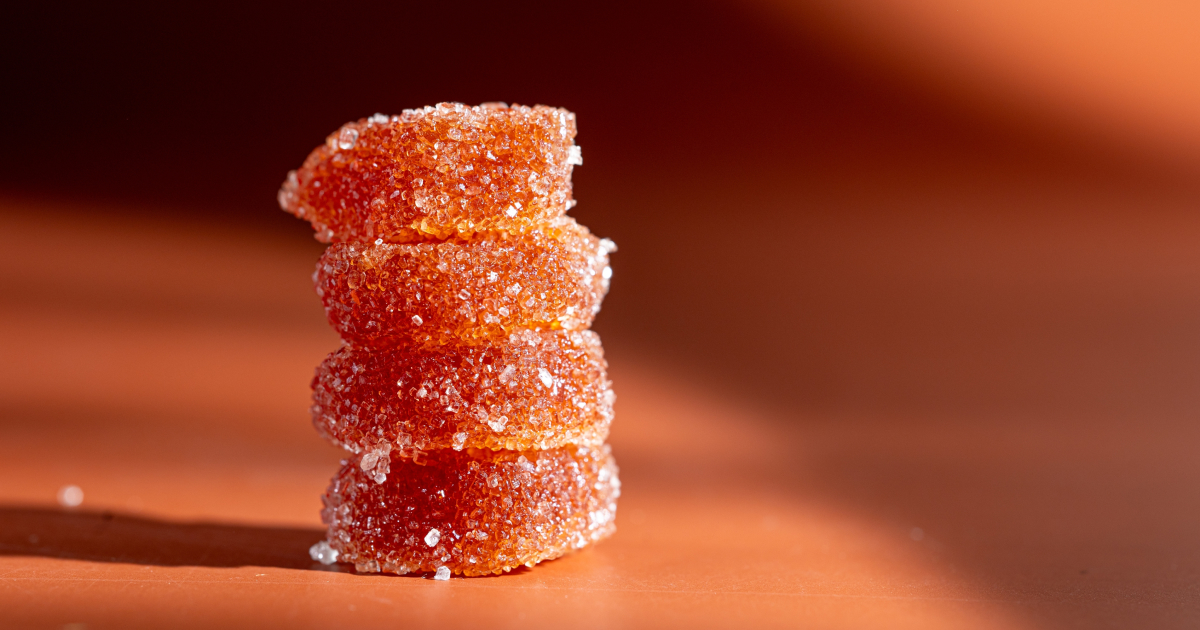
Most bad experiences with edibles trace back to five persistent myths: that you should redose after an hour, that the milligram number predicts your experience, that strong flower makes stronger edibles, and that edibles are just a stronger version of smoking. All five share a common root: edibles are metabolized differently than inhaled cannabis, and that single biological fact makes their effects harder to predict. Whether you're shopping at our Niles dispensary or buying edibles for the first time anywhere, the right starting dose and the right product format depend on understanding how this metabolic difference plays out.
Myth 1: If you don't feel anything in an hour, take more
Edibles can take anywhere from 30 minutes to two full hours to produce noticeable effects, and taking a second dose before the first one has peaked is the single most common reason people end up having an overwhelming experience. Clinical research published in Cannabis and Cannabinoid Research confirms this 30-to-120-minute onset window, with significant variation between individuals.
Where you fall in that range depends on a handful of things. Your metabolism, body weight, whether you've eaten recently, and the specific product format all play a role. A gummy that has to be fully digested will take longer to kick in than a tincture absorbed under the tongue. A high-fat meal eaten beforehand can speed up THC absorption, while an empty stomach can delay onset and then intensify the effect once it arrives.
The "nothing is happening" window is where most people get into trouble. Waiting, combined with the assumption that the product didn't work, leads to a second dose. Then both doses arrive at once. The standard guidance from every credible source is the same: wait at least two hours before considering more. That patience is the single most effective harm-reduction tool for edibles.
Myth 2: The dose on the label tells you how high you'll get
The milligrams printed on a package describe the amount of THC in the product. They don't describe the experience you'll have. Individual response to edibles varies based on tolerance, body chemistry, and consumption context, which means 5mg can feel like nothing to one person and like a full evening to another.
In Michigan's regulated market, 3mg or 5mg is the standard starter dose. But cannabis dosing varies significantly from person to person. A daily flower user may barely register 10mg, while someone returning to cannabis after a 20-year break may find 2.5mg plenty. Body weight is a factor, but it's not the reliable predictor people assume it is. Gut microbiome composition and liver enzyme activity (specifically CYP2C9 and CYP3A4 enzymes) affect how efficiently your body converts THC into its active metabolite.
If you're new or returning after a long break, start at 2.5 to 5mg regardless of your size, your friend's recommendation, or what worked for someone else.
Myth 3: Taking too much is dangerous
The symptoms of overconsumption are unpleasant and sometimes genuinely frightening: elevated heart rate, anxiety, disorientation, nausea, time distortion. They're also temporary. These symptoms resolve as THC clears the system, typically within a few hours.
What helps: a calm environment, water, a light snack, lying down. Some evidence suggests CBD can moderate THC's effects, so having a CBD product on hand isn't a bad idea. What doesn't help: panic, more cannabis, or alcohol.
Now the lethality question. According to the CDC's current cannabis, a fatal overdose caused solely by cannabis is unlikely. The theoretical lethal dose, established in a 1988 DEA ruling, would require consuming roughly 1,500 pounds of marijuana in 15 minutes. Not physically possible.
One important note. For people with certain cardiac conditions or anxiety disorders, the elevated heart rate and psychological intensity can feel more serious and may warrant medical attention. Those individuals should talk to a physician before using edibles.
If you have questions about dosing or want help finding a product that fits what you're trying to accomplish, our staff at The ReLeaf Center can walk you through it. That's what we're here for.
Myth 4: Edibles are just a stronger version of smoking
Edibles and inhaled cannabis produce meaningfully different experiences because the active compound reaching your brain is chemically different. When you inhale, delta-9-THC enters the bloodstream directly through the lungs. When you eat an edible, your liver converts delta-9-THC into 11-hydroxy-THC, a metabolite that is more potent per milligram and produces a qualitatively different effect. Research confirms that 11-hydroxy-THC crosses the blood-brain barrier more readily and binds to CB1 receptors with greater affinity than its parent compound.
This is why someone with a high flower tolerance can still be caught off guard by edibles. Different compound doing the work.
The duration gap is just as significant. Inhaled effects typically last one to three hours. Edible effects commonly last four to eight hours, with some residual effects stretching longer. For sleep support, sustained pain relief, or situations where discretion matters, that longer duration is often the whole point. But it also means edibles aren't a drop-in substitute for flower in most situations. They're a different tool with different use cases, and understanding that distinction helps people choose the right format for what they're trying to do.
Myth 5: All 10mg edibles feel the same regardless of brand or formulation
The milligram count on two different products can be identical while the experiences they produce are noticeably different. Formulation matters more than most people expect, and it's one of the least-discussed variables in edibles education.
Full-spectrum edibles contain cannabinoids and terpenes beyond THC. Distillate-based edibles are typically pure THC isolate with no supporting compounds. The entourage effect (the theory that cannabinoids and terpenes interact to modify the overall experience) is still being studied, but many experienced users report that full-spectrum products feel less sharp and more grounded than distillate products at the same dose. Whether that's pharmacology or expectation is genuinely unclear, but the practical difference is real enough that it's worth knowing which type you're buying.
Carrier fat also plays a role. THC is fat-soluble, and edibles made with higher-quality lipid carriers (coconut oil, for example) tend to absorb more consistently than those made with lower-fat bases. Two gummies at 10mg from different producers can have meaningfully different bioavailability depending on how they were made.
This is part of why ReLeaf carries our own house brand, Tri-Med. When we control the formulation from seed to package, we know exactly what's in the product, which carrier we used, and which cannabinoids and terpenes are present. That kind of transparency isn't possible with every product on the shelf, which is why understanding formulation is worth the conversation when you're choosing an edible.
If a product didn't work the way you expected, the formulation is worth asking about before you adjust your dose. A budtender who knows the product line can tell you whether you're comparing full-spectrum to distillate, or whether the carrier fat differs between what you tried and what might work better.
How to have a good experience with edibles
The practical rules are straightforward:
-
Start at 2.5 to 5mg if you're new or returning after a long break.
-
Wait a full two hours before considering any additional dose. Set a timer if it helps.
-
Pay attention to set and setting. Because edible effects last longer, where you are and who you're with matters more than it does with a quick smoke session.
-
Talk to a budtender before giving up on edibles. If a product didn't work as expected, the issue is often the specific product or dose, not the format. Someone who knows the product line can help you adjust. For more detail, here's a good starting point on what to expect your first few times with edibles.
Frequently asked questions
Why did edibles not work for me the first time but produce strong effects the second time?
First-time edible experiences are often underwhelming because of individual metabolic variation, what you ate that day, or inconsistency in the product itself. The second time, one or more of those variables shifted. This is common and doesn't mean edibles are inherently unpredictable. It means your personal baseline takes a few sessions to establish. Keeping notes on dose, timing, and food intake makes the pattern clearer faster.
Can I mix edibles with alcohol?
Alcohol and THC intensify each other's effects, and the combination is more likely to produce nausea, dizziness, and anxiety than either substance alone. If you're going to combine them, keep both doses low and give the edible time to take effect before drinking. Many people find the combination unpleasant even at moderate levels.
Do edibles show up differently on a drug test than smoked cannabis?
No. Standard drug tests screen for THC metabolites, which are the same whether THC was inhaled or ingested. Edibles don't produce a different test result. Because they're processed through the liver, some metabolites may persist slightly longer in certain individuals, but the test itself doesn't distinguish between consumption methods.
Are edibles a good option for someone who has never used cannabis before?
Edibles can work well for first-time users, but they require more patience and precision than other formats. Starting at 2.5mg, waiting the full two hours and having someone experienced nearby makes the first session much more manageable. The slower onset can feel uncertain if you don't know what to expect, so preparation matters.
What's the difference between a 10mg edible and a 10mg tincture?
A tincture held under the tongue absorbs sublingually, bypassing first-pass liver metabolism. That produces faster onset (typically 15 to 45 minutes) with a somewhat shorter duration. A 10mg edible goes through digestion and liver conversion, producing slower onset and longer-lasting effects. Same milligrams, different experience. The choice depends on whether you want faster relief or longer duration.
View More
 What Does "Full-Spectrum" Mean on a Cannabis Product?
 Why Does Cannabis Make Some People Anxious?
 Is It Okay to Use Cannabis Every Night to Sleep?